
Cold floors in January. Sticky floors in July. Power bills climbing all year. The right crawl space insulation — installed for our humid climate — fixes all three.
Walk under almost any Midlands home more than a few years old and you'll find the same sight: pink fiberglass batts sagging from the floor joists like laundry falling off a line — dark with moisture, drooping onto the dirt, quietly hosting mold and pests.
Here's why: fiberglass works by trapping air, and it only insulates while it's dry and lofted. In a humid vented crawl space, it soaks up moisture like a sponge, compresses, sags, and stops insulating — while holding all that dampness directly against your floor framing. In our climate, traditional batts under the floor aren't just ineffective; they can actively make the moisture problem worse.
That's why we insulate crawl spaces with materials built for the conditions.
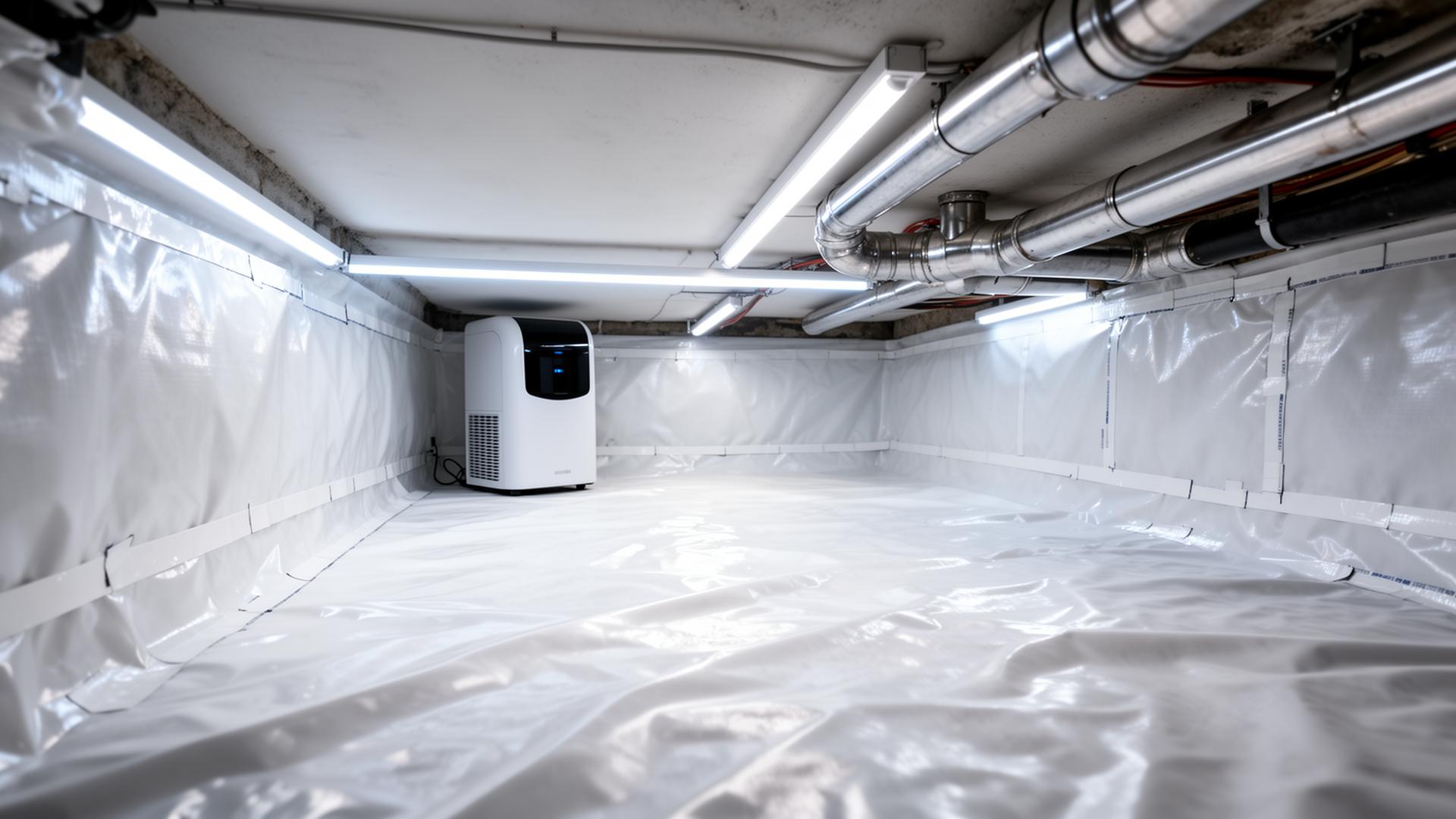
Rigid foam board installed on the crawl space's perimeter walls rather than stuffed between floor joists. Paired with a sealed crawl space, this brings the space inside your home's thermal envelope — the modern building-science standard for humid climates. The boards don't absorb water, don't sag, don't feed mold, and deliver borate-based pest resistance that Columbia's insects genuinely dislike.
Spray-applied foam that expands into gaps and cures rigid, delivering high R-value per inch, an air seal, and its own vapor resistance in one application. Ideal for rim joists and band boards (the leakiest part of most floors), irregular framing, and spaces where air sealing matters as much as insulation.
Insulating a damp crawl space is like putting a sweater on a wet dog. Because we do every step in-house, the sequence happens in one coordinated project — not four contractors pointing at each other.
The failed batts and any contamination come out first — see our crawl space cleanout service.
Drainage, pumps, and a sealed vapor barrier or full encapsulation as your home needs.
Foam board or closed-cell spray foam, chosen for your space during the free inspection.
Warmer winter floors, drier summer air, and a power bill that finally behaves.
Which material is right depends on your crawl space — vented or sealed, wall heights, moisture condition, and how you use the home. The free inspection settles it, and we'll give you the reasoning, not just a price. Pair it with encapsulation for the full building-science solution, or start with a cleanout if failed batts and debris need to come out first.
Proudly serving Columbia, Lexington, Irmo, Blythewood, Elgin, Chapin and surrounding communities across Richland, Lexington, Fairfield and Kershaw counties.
We can — but if the old batts failed from moisture, new ones will fail the same way. The lasting fix is to address the moisture and switch to materials that tolerate our climate. We'll show you the condition of your space and let the evidence make the case.
First, no insulation fixes a wet crawl space — moisture control comes first. After that, rigid foam board on the walls (in a sealed space) or closed-cell spray foam are the moisture-tolerant choices. Both resist water absorption; fiberglass does the opposite.
Rigid foam insulation board with borate-based protection — borates are a well-established, low-toxicity mineral treatment that deters termites and other pests. Walls insulated with it stay insulated and stay unappetizing to bugs.
In a vented crawl space, the floor. In a sealed/encapsulated space, the perimeter walls — which brings the whole crawl space into the conditioned envelope and performs better in humid climates. This is exactly the kind of call the inspection makes for your specific home.
It depends on square footage, material, and what prep the space needs. Inspections are free and quotes are firm and written.
Strip out the failed fiberglass before the foam goes in.
Learn more →Dry the space first — insulation second.
Learn more →Wall insulation performs best in a sealed crawl space.
Learn more →Seal the ground under your newly insulated space.
Learn more →Find out what's actually between your floors and the weather.