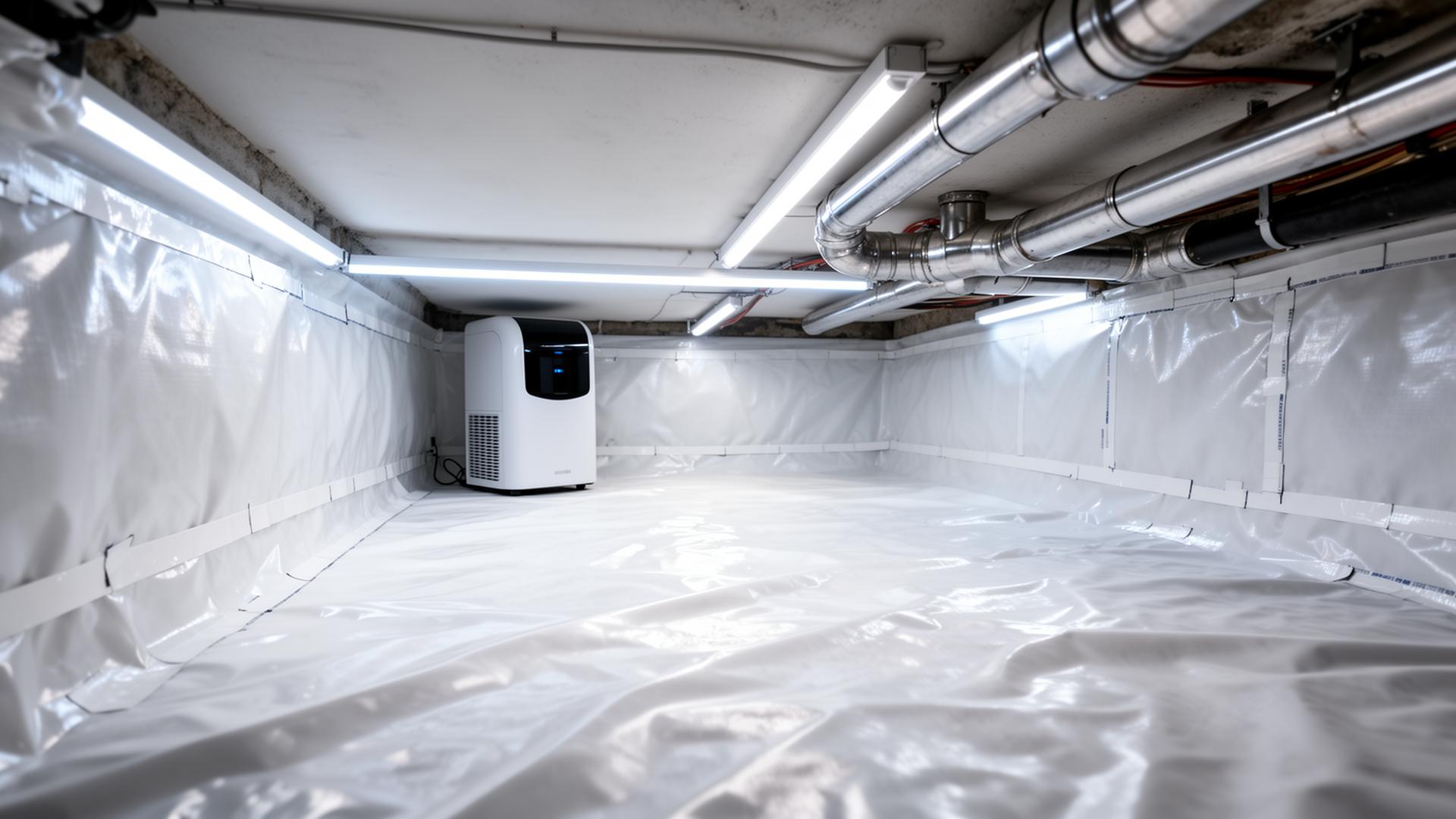
Old insulation, fallen debris, mold, pest droppings, rotted wood — we haul out everything that shouldn't be under your home and leave a clean, healthy space you're not afraid to look at.
Most Columbia homeowners have never actually seen their crawl space. When we go under for a first inspection, here's what we routinely find: fiberglass insulation that soaked up moisture years ago and collapsed onto the dirt. Construction debris the builders left behind. Rodent and camel cricket activity. Mold spreading across joists. Soft, darkened wood where wet rot has set in. Old, torn plastic doing a bad impression of a vapor barrier.
Every one of those things is either feeding moisture, feeding pests, or feeding the degraded air that rises into your living room. A professional cleanout is how you reset the space to zero — and it's the essential first step before any vapor barrier, encapsulation, or insulation work. Sealing a dirty, moldy crawl space just locks the problem in.
You get before-and-after photos of everything. Several customers have told us their crawl space ended up cleaner than their garage.
Construction leftovers, trash, and fallen materials — hauled out and disposed of.
Wet, sagging, pest-contaminated fiberglass batts stripped out safely.
Affected framing and subfloor surfaces cleaned and treated — and, critically, the moisture source identified so it doesn't return.
We probe joists, sills, and subfloor for wet rot and dry rot, document what we find with photos, and walk you through it honestly.
Droppings and nesting material removed; entry conditions corrected.
Because "musty" should not be your home's signature scent.
Mold under a Columbia home is common — our humidity makes sure of that — but it is never normal, and it doesn't stay put. The stack effect pulls crawl space air up through your floors, which means mold spores and musty odors below become the air your family breathes above.
Here's the honest truth most companies won't tell you: killing the mold you can see is the easy part. Mold is a symptom. If the crawl space stays damp, it returns — guaranteed. That's why every mold cleanup we do comes paired with a moisture diagnosis: is it ground vapor, humid vent air, a drainage problem, a plumbing leak? Fix that, and the mold problem is actually solved. That's the difference between remediation and a temporary wipe-down. See how we control crawl space moisture →
Wet rot happens when wood stays persistently damp — from standing water, soil contact, condensation, or leaks. The wood darkens, softens, and loses strength where the moisture sits. Dry rot is the more aggressive fungal decay that can spread beyond the original wet spot, leaving wood brittle and crumbly. (Despite the name, it also starts with moisture.)
Both have the same root cause — chronic crawl space moisture — and the same three-part fix: stop the water, dry the space, repair the damaged wood. During your free inspection we'll show you exactly which condition you have, how far it extends, and what the repair plan looks like, in plain English with photos.
Do it in this order and you never pay for the same fix twice.
Remove contamination, treat mold, assess rot — reset the space to zero. (You are here.)
Drainage, sump pumps, and moisture control as your home needs them.
A heavy-duty vapor barrier or full encapsulation keeps moisture out for good.
Modern, moisture-tolerant insulation keeps floors comfortable and bills lower.
Proudly serving Columbia, Lexington, Irmo, Blythewood, Elgin, Chapin and surrounding communities across Richland, Lexington, Fairfield and Kershaw counties.
The most common tip-off is a musty smell indoors, especially in summer. Visible signs include dark staining on joists, white or fuzzy growth on wood, and damp, sagging insulation. If you're smelling it upstairs, it's worth a look — the inspection is free.
Mold degrades indoor air quality, and people with allergies, asthma, or respiratory sensitivity often feel it most. Beyond health, mold is a flashing indicator that moisture is attacking your floor structure. Either way, it's not something to leave alone.
Surface treatments on framing rarely reach the roots of the growth, and they do nothing about the moisture feeding it. Without fixing the water problem, mold returns. Clean and correct — that's the fix.
Most cleanouts take one day; larger spaces or heavy contamination can take two. You'll get a specific timeline with your quote.
It depends on the size of the space and what's in it. Quotes are free, written, and firm — most homeowners get theirs on the spot during the inspection.
Stop the moisture that caused the mess in the first place.
Learn more →Seal the clean space against ground moisture.
Learn more →The complete seal — walls, vents, and humidity control.
Learn more →Replace failed fiberglass with moisture-tolerant foam.
Learn more →Find out what's really under your house — with photos, honest answers, and a firm quote.